
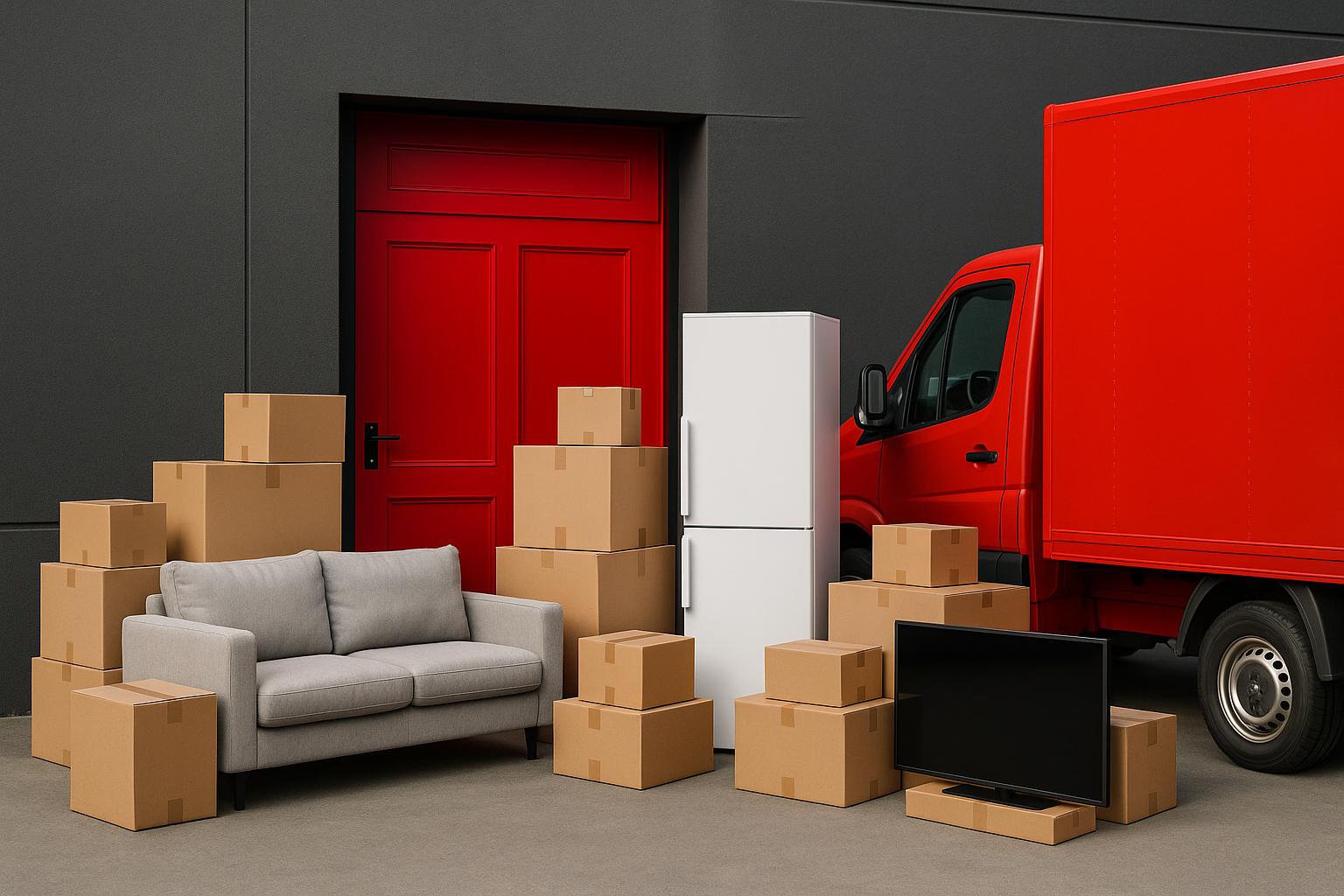
Thun for newcomers: 13 districts between the Aare Lake Thun and Goldiwil
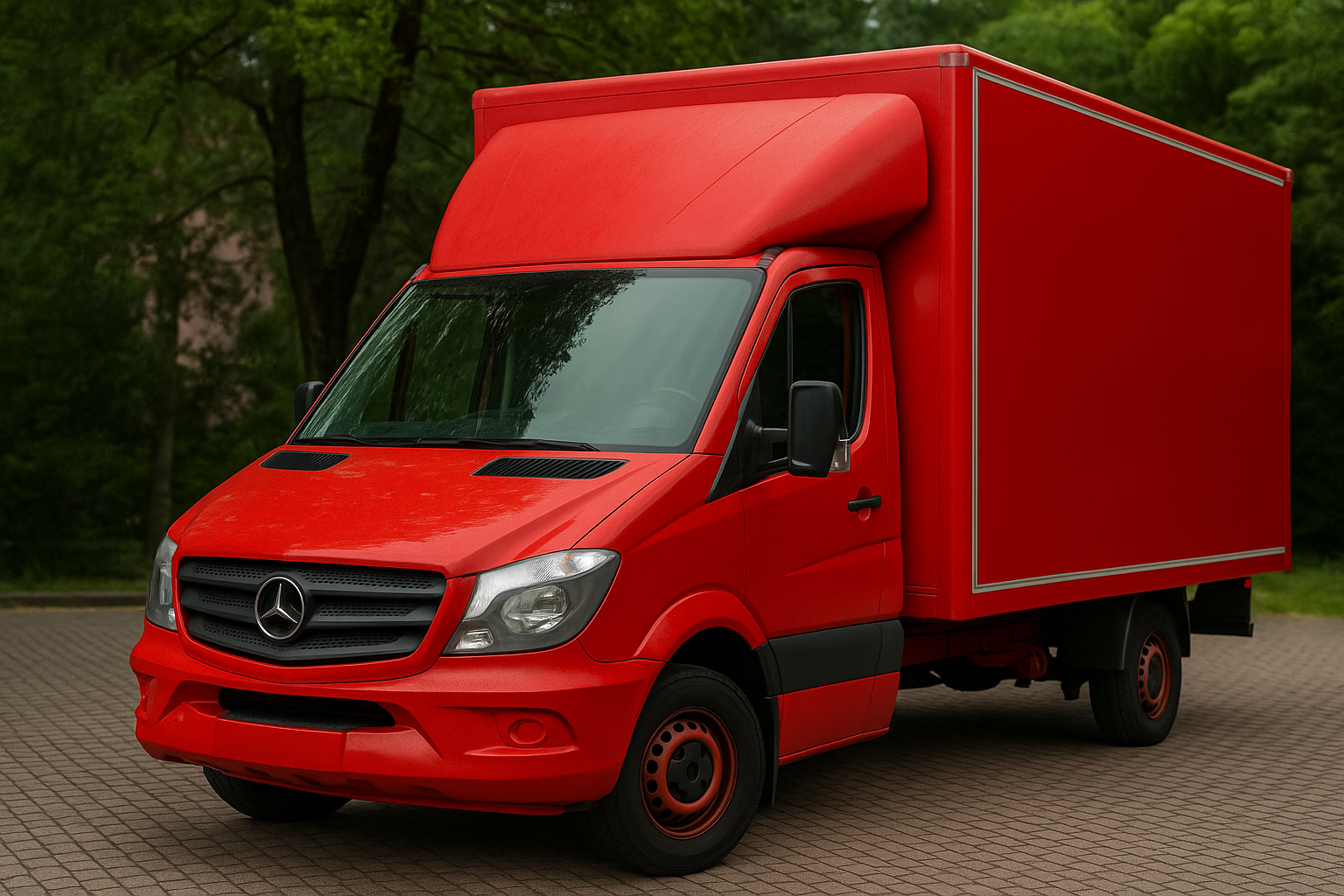
Newcomer's Guide to Thun
Thun: the city where the Aare flows out of the lake
The first few weeks
Thun lies where the Aare leaves Lake Thun and is known as the "Gateway to the Bernese Oberland". Switzerland's eleventh-largest city is also its largest garrison town; the agglomeration has around 80,000 inhabitants. The city centre consists of the Schlossberg, the Unterstadt, the Obere Hauptgasse with its raised pavements and the Bälliz, an island in the Aare. A move to Thun often leads into narrow old-town lanes, up to the heights of Goldiwil or down to the lake in Dürrenast and Gwatt. More about our home removal service.
Whether it is furniture transport, moving a piano into an older flat or a household clearance before your move to Lake Thun – we handle each step at a fixed price after a survey. We come from Berlin-Moabit (Stromstraße 21), and we pack, transport and assemble your furniture; your belongings are covered under the HGB. According to the city, you have 14 days from moving in to register. The route and customs are described on our page Moving from Berlin to Thun.
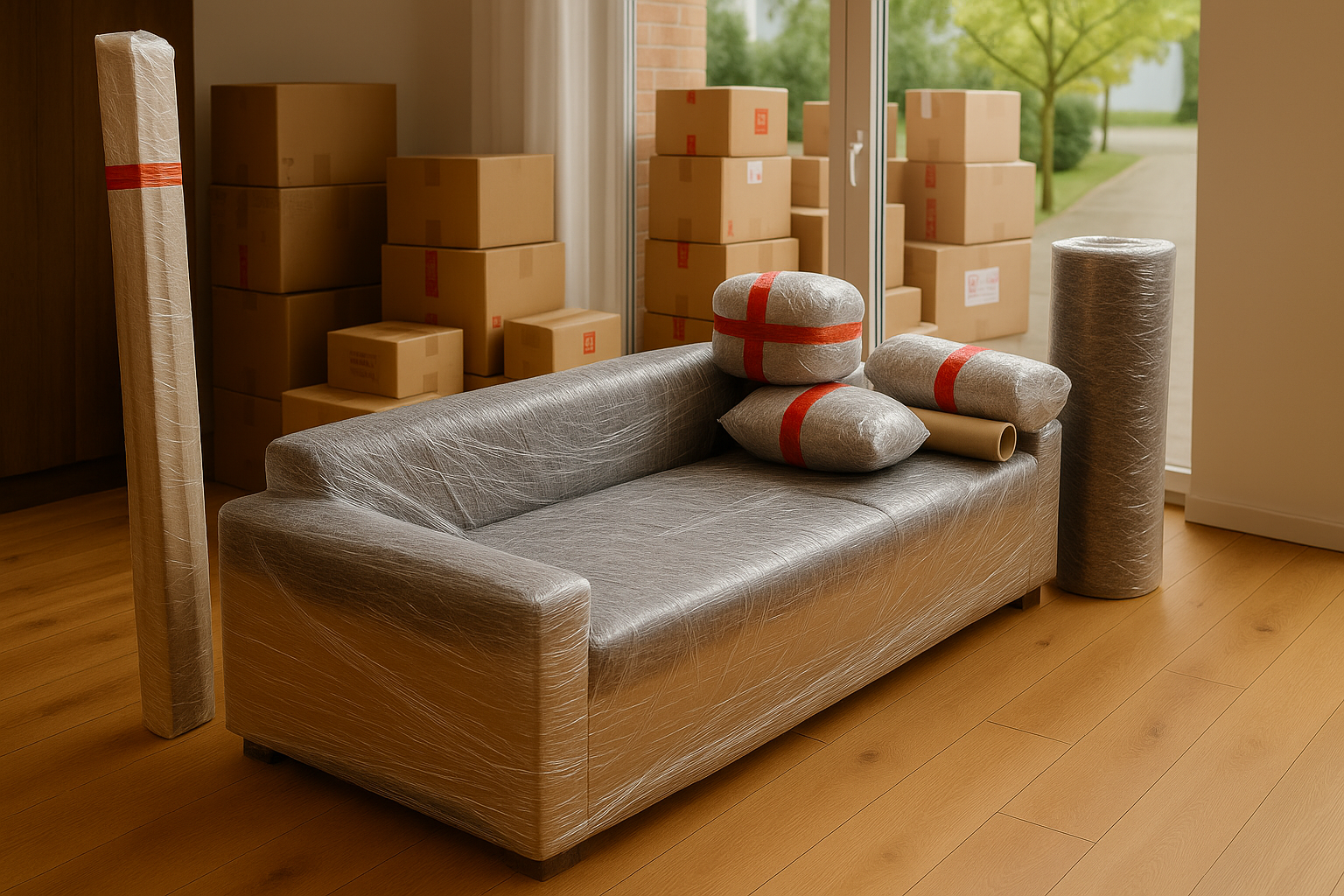
A no-obligation quote for your move to Thun
Fixed price after a survey, liability under the German Commercial Code (HGB)
Call us on 01625978461 or request your fixed-price quote online. After the survey we draw up a tailored quote, including access and floor. That way you know from the start what your move to Thun will cost.
Quotes available individually based on workload, scheduling and the desired scope of services.
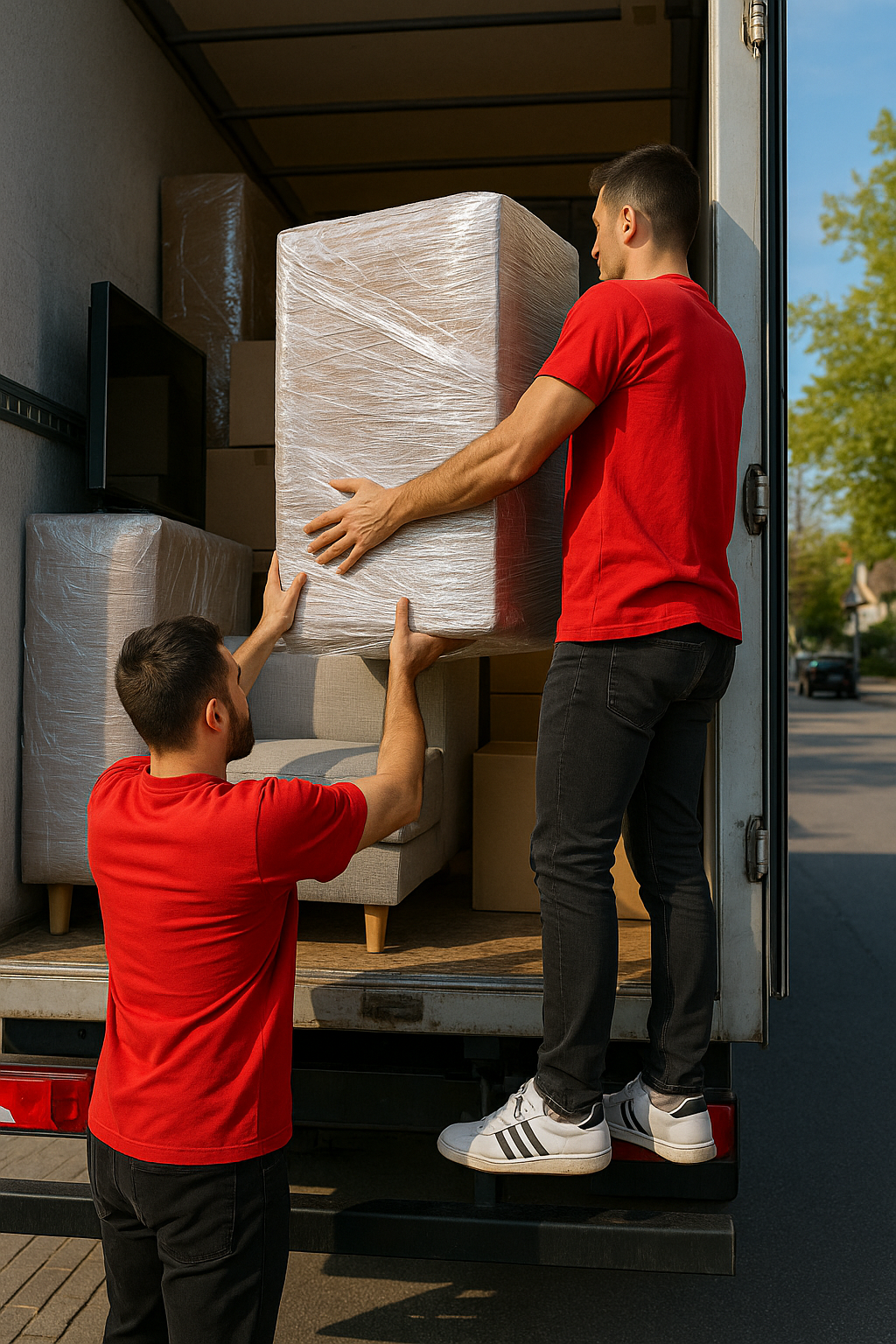
How we prepare your move
Old town, parking, customs
According to the city, there are no zone parking cards for Thun's city centre, and tradespeople park in the pedestrian and shared-space zone with a card of their own. That is why we clarify access, the stopping place and carrying routes before moving day, whether in the old town, in Goldiwil or in the Neufeld. We come from Berlin-Moabit (Stromstraße 21); when crossing the border you present Form 18.44 for household removal goods to customs. Your belongings are covered under the HGB. Destinations with their own page: Locations.
Packing Service
Customs papers
Piano transport
Furniture assembly
Your list for Thun
From the residents' services to the parking card: these points belong on your list after moving to Thun. We calculate the transport after the survey with a fixed price.
Registering
Documents
Health insurance
Parking card
Childcare
Settling in by the lake
Shared load to the Bernese Oberland
What
newcomers should sort out early
A move involves many tasks – from registering with Thun's residents' services and cancelling old contracts to organising the new flat. If the flat is not yet ready to move into, storage is possible. The tax and collections department is responsible for your tax return, and for household rubbish you need fee-paying bags or stickers. For a company move to Thun, too, we plan time windows so that business carries on.
Choosing a neighbourhood
Organising moving day
Businesses and special cases

Questions about living in Thun
Thun's districts at a glance
According to the city, Thun is divided into 13 districts. The city centre with the Schlossberg, the town church, the Obere Hauptgasse and the Bälliz is the oldest district. Along the left lakeshore, the former villages of Dürrenast and parts of Gwatt belong to the built-up area, with a lido and Schadau Castle. The largest district is the Neufeld with around 8,900 residents, and the Seefeld lies close to the station.
In the west lie the Lerchenfeld district with its village character, the Allmend, which today serves mainly as a military training ground, and the Allmendingen area. In the east, the municipal area extends into the hills as far as the village of Goldiwil, the city's sunny terrace. Which district suits you depends on your commute, school and bus connections – we plan the move according to access and floor.
Working and leisure in Thun
We deliberately do not give reliable current rent figures here; compare offers yourself. Economically important, besides tourism, are mechanical and equipment engineering, retail, health and social care, construction and administration; then there is RUAG, the military – Thun being Switzerland's largest garrison town – and, with EMPA, a research institution for materials science. The public hospital belongs to the Spitäler STS hospital group.
What makes Thun special is the combination of city, lake and mountains: Lake Thun invites you to swim and sail, the old town with Thun Castle and its raised pavements to stroll, and from the Niesen you look down on the city. Thun has been connected to the A6 motorway since 1971, and since 2011 the Stockhorn Arena with the Panorama Center has stood at the Thun-Süd exit.
Arriving in Thun also means: rubbish goes into fee-paying bags or gets fee stickers, your tax return goes to the canton via BE-Login, and the residents' services hand out a welcome pack at the counter. If you are new to a district, since 2022 you will also find a community centre in Lerchenfeld.
Guide prices for moving to Thun
The cost of a move depends mainly on the size of the flat. For a 1-room flat it starts at €365, for a 2-room flat at €599. If you live in a 3-room flat, you pay from €889, and for a 4-room flat it is from €1,279. Houses and villas are quoted individually. If you are moving further away, long-distance moves cost from €4.15/km. The quickest way is a free survey.
What determines the price for Thun
Several factors count for a realistic cost estimate: the volume of your household goods, the distance to be covered (from €4.15/km), the floor and whether there is a lift. Sometimes a parking restriction zone is also needed to keep the transport running smoothly. Furniture assembly and a shared load also affect the final price.
Services for your move to Switzerland
Moving services for every need
From the part load to the complete company move – we are your dependable partner.
- Part load part load
- Company move company move
- Home move home move
- Clearance clearance
- Furniture transport furniture transport
- Move with assembly move with assembly
From Berlin to the Bernese Oberland
We come from Berlin-Moabit and accompany your move within Germany and abroad. Destinations with their own page can be found in the locations overview, and further information on long-distance moves on our website.
Registering in Thun: residents' services, 14 days and eUmzug
According to the City of Thun, anyone moving to Thun registers within 14 days of moving in with the residents' services (Hofstettenstrasse 14, tel. 033 225 82 49, [email protected]). The city states a registration fee of 20 francs; the confirmation of residence costs 20 francs per adult.
You can appear in person at the counter with your ID or passport or proceed online via eUmzugCH. There you deregister from your old municipality, and the notice of arrival goes to Thun. If your previous municipality does not use eUmzugCH, register in person after deregistering. A welcome pack is available at the counter.
According to the city, foreign nationals from EU/EFTA states bring their ID or passport, the deregistration confirmation from their previous Swiss municipality, their foreign national's permit and, if applicable, the assurance of a residence permit. Fees follow the cantonal fee scale. Since 1 February 2024, the certificate of origin (Heimatschein) no longer has to be deposited physically in the canton of Bern.
Health insurance must be taken out within three months of taking up residence; you are free to choose your insurer. For tax questions, the tax and collections department is responsible (033 225 82 01); the municipal tax rate has been 1.66 units since 2025. Further information on the region can be found in Living in Bern.
Districts and parking cards in Thun
According to the city, Thun is divided into 13 districts. The city centre (around 3,200 residents) is the oldest district, with the castle, town church, Obere Hauptgasse and the Bälliz, encircled by the Aare. Dürrenast (around 6,500) lies by the lake with a lido, Schadau Castle and plenty of green space. With around 8,900 residents, the Neufeld is the largest district and consists of housing blocks, high-rises and detached houses; it has four kindergartens, two primary schools and a lower secondary school. The Seefeld (around 1,400) has tree-lined avenues and large houses with gardens, lies close to the station and, according to the city, is popular with families.
For parking, the city offers digital parking cards (Office for Parking Cards and Fines, Thunerhof, Hofstettenstrasse 14, 033 225 84 98):
- Type A zone parking card for residents: 20 francs per month or 220 francs per year, minimum 3 months; there are no zone parking cards for the city centre.
- Day parking card: 5 francs, valid for 24 hours.
- Tradespeople's parking card in the pedestrian and shared-space zone: 5 francs per half day, 10 francs per day.
In parking spaces with a parking disc, a maximum parking time of 4 or 1 hour applies. More than 2,000 fee-paying parking spaces can be paid for via Parkingpay or Sepp Parking.
If you are coming from further afield, our article Long-distance move to Switzerland explains the basics of the process.
Related Articles