Living in Genk: Registration Eight City Areas, Daily Life in Limburg
Arriving in Genk
Genk: Former Mining Town on the Albert Canal
– the first few weeks
Genk lies in the Belgian province of Limburg on the Albert Canal and had around 67,900 inhabitants on 1 January 2024. Until 1900 it was a hamlet of just over 2,400 people; with coal came the collieries in Winterslag, Waterschei and Zwartberg from 1914, and with them immigrants from Poland, Ukraine, Italy, Greece, Spain, Portugal, Turkey and Morocco. The last colliery closed in 1988, and the Ford plant in 2014. Genk has had city status since 2000. The official language is Dutch; if you do not speak it yet, you will find the Onthaalloket (welcome desk) for newcomers in the Stadhuis (town hall).
A major employer today is the ArcelorMittal stainless steel plant, plus the port in Langerlo with its container terminal and, since 2020, a beverage can plant. Genk is well connected via the E313 motorway towards Antwerp and Liège and the E314 towards Aachen. For leisure there are the Bokrijk estate with its open-air museum and arboretum, the C-mine cultural site and KRC Genk. We do not quote specific rents because we have no reliable source. We handle the transport from Germany; more on this under international move.
Your Move to Genk – Survey First, Then Plan
Predictable from the first box to assembly
Call us on 01625978461 if you are moving to Genk. After a survey we quote a fixed price for the route of around 668 km; your belongings are covered under the HGB, and additional insurance is available for valuables. How the journey works is described in our long-distance moving guide for Genk.
Quotes available individually based on workload, scheduling and the desired scope of services.
Transport by us, paperwork by you
Who does what
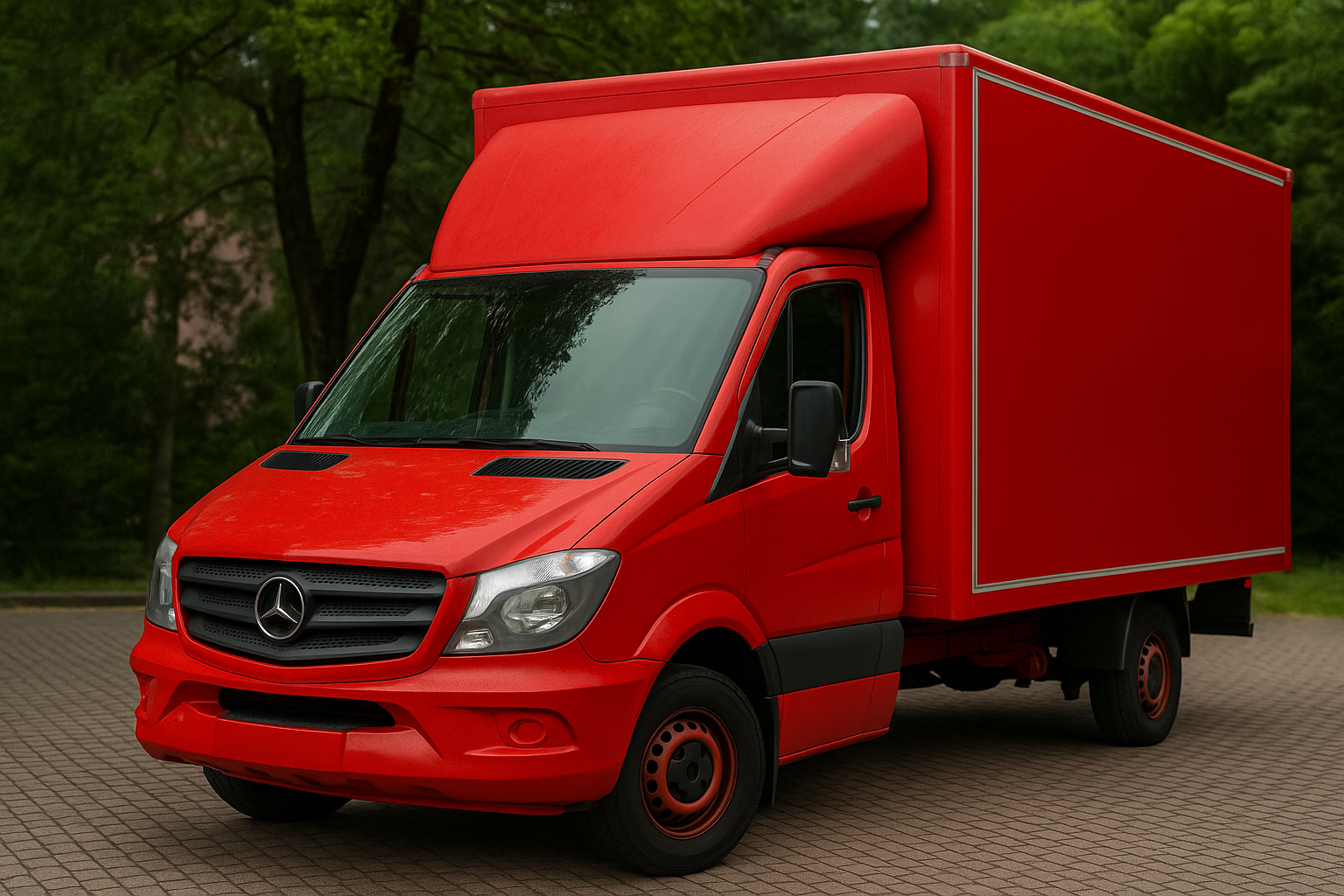
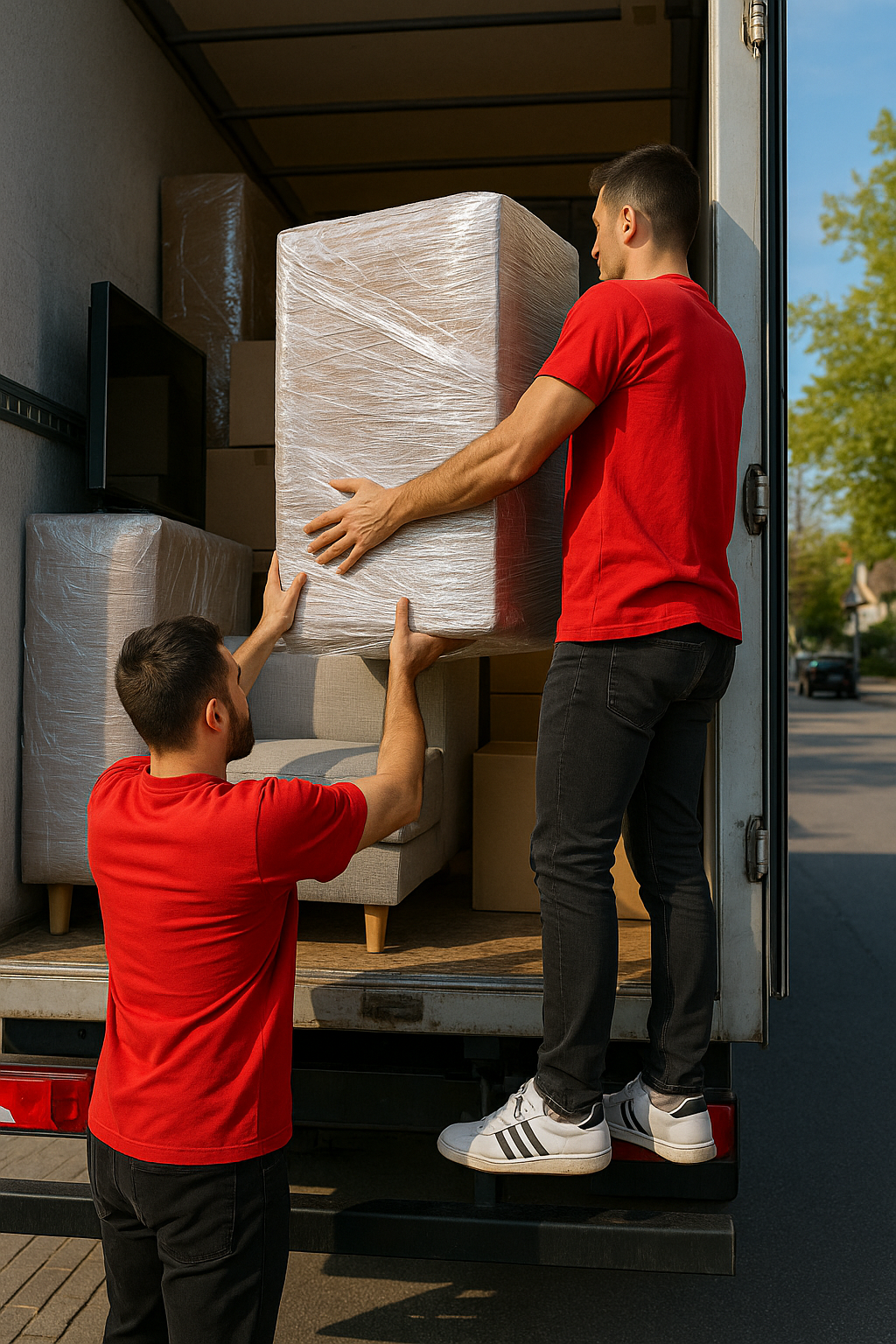
We have no branch in Genk: the lorry sets off from Berlin-Moabit (Stromstraße 21) and drives around 668 km via the A2, A46 and the E314. Beforehand we ask about the floor, lift and access – whether in Winterslag, Waterschei or Genk-Centrum. Where the lorry may stop outside the new address, we clarify in advance according to the rules of the City of Genk. We give you the fixed price after the survey; liability is under § 451e HGB (€620 per m³). You register with the City of Genk yourself – within eight days for moves within Belgium, and within three months when coming from another EU country. Further steps are described in our article Emigrating to Belgium.
Packing Service
Furniture assembly
Storage
Access sorted
After Moving In to Genk
The removal van is empty – now the arriving begins. Newcomers in Genk should take care of these six points in the first few weeks; we handle transport, assembly and access, while the trips to the authorities are up to you.
Register with the municipality
Wait for the wijkinspecteur
Get to know your neighbourhood
Practise Dutch
Check the waste calendar
Deregister in Germany
Just One Room to Genk?
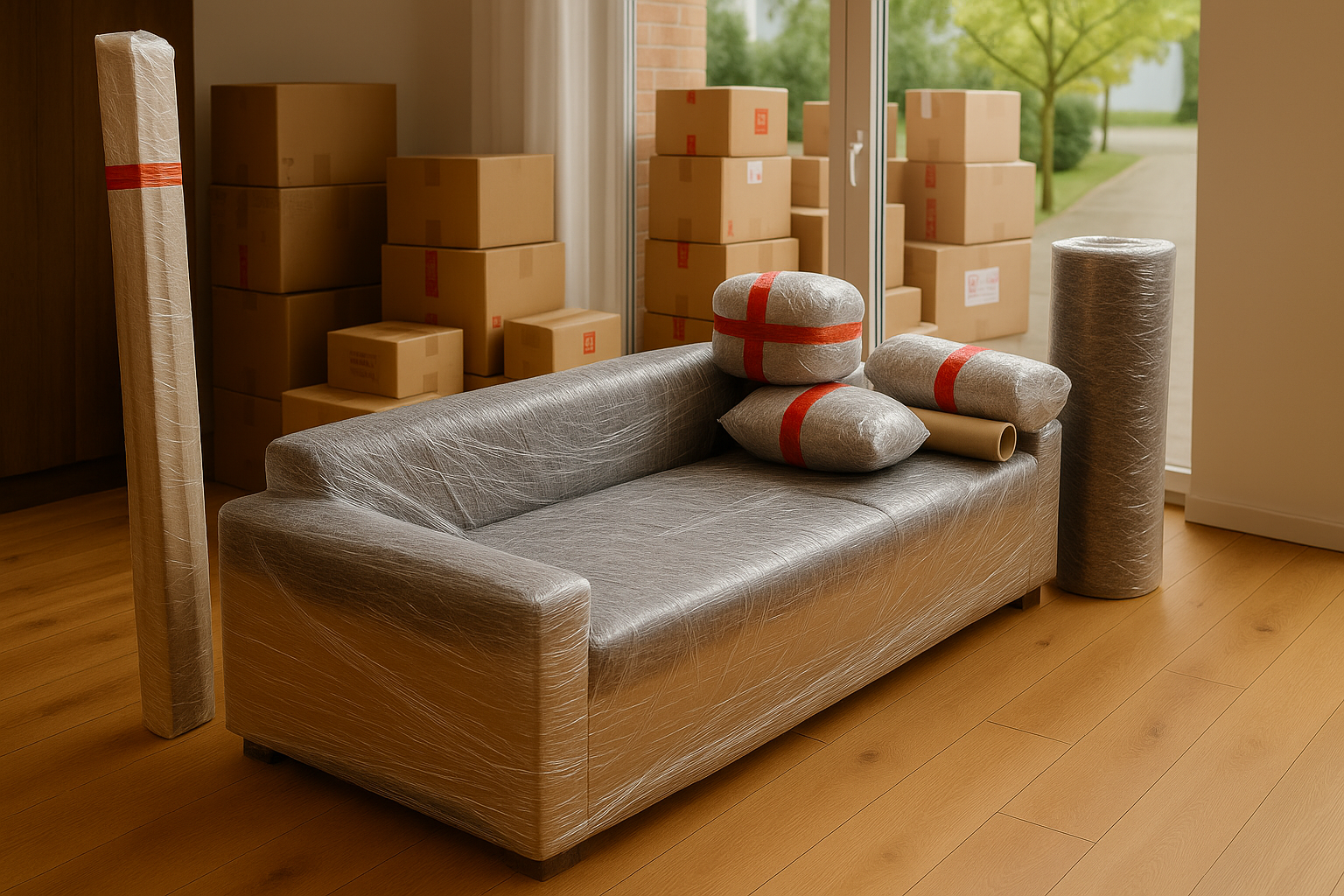
Anyone moving to Genk for a first job or to study in Limburg often brings only a few pieces of furniture. With a shared load, your belongings use free load space on a trip heading towards Genk. We agree collection in Berlin and delivery in advance; this trip, too, is covered under the HGB.
New
in Genk: Everyday Life
Anyone moving to Genk experiences a Belgian peculiarity: after you register, a wijkinspecteur comes to check the address, and only then is the address entered on your eID. In the first few weeks, registration with the municipality, the Limburg.net waste collection calendar, nursery and school places and – for many newcomers – first steps in Dutch are also on the agenda. Then there is choosing a neighbourhood between the former mining districts and the centre. This guide sums up everything newcomers from Germany should know in the first few weeks.
Paperwork and deadlines
Flat and neighbourhood
Organising everyday life

Frequently Asked Questions About Living in Genk
Neighbourhoods and City Areas: How Genk Is Organised
Genk grew out of many hamlets; Wikipedia lists localities such as Bokrijk, Boxbergheide, Bret-Gelieren, Centrum, Sledderlo, Termien, Waterschei, Winterslag and Zwartberg. The city itself is divided into 30 neighbourhoods (wijken) in eight city areas, from Genk-Centrum via Genk-West with Winterslag to Genk-Oost with Waterschei. Miners' housing estates grew up around the former collieries of Winterslag, Waterschei and Zwartberg; the C-mine cultural site now stands on the Winterslag colliery grounds.
In the south, in the Langerlo district, lies the port on the Albert Canal; the Bokrijk estate with its forest and open-air museum also belongs to the city. We do not quote specific rents because we have no reliable current source. For questions about the neighbourhood boundaries, the Gebiedsgerichte Werking (area-based work) department in the Stadhuis is responsible.
Work, Transport and Leisure in Genk
After the end of mining in 1988 and the closure of the Ford plant at the end of 2014 – where around 4,000 people last worked – Genk's economy has changed. A major employer is the ArcelorMittal stainless steel plant; the port in Langerlo has had a container terminal with a rail connection since 1999, and since 2020 a Benepack plant has been producing beverage cans.
By car you reach Genk via the E313 (Antwerp–Liège) and the E314 (Leuven–Aachen). For leisure there are the Bokrijk estate with its open-air museum, playground and arboretum, the Europlanetarium, the Emile Van Doren Museum and matches of KRC Genk, four-time Belgian champions. In 2012 Genk hosted the Manifesta art biennial. Many leisure activities are aimed at families; information in Dutch and help getting started are offered by the Onthaalloket in the Stadhuis. For the commute, car and bus are important, because Genk is strongly oriented towards the motorways; before choosing a flat, check the route to your workplace at rush hour.
Prices for your move
- Small 1-room flat: from €365
- Cosy 2-room flat: from €609
- Family-friendly 3-room flat: from €915
- Spacious 4-room flat: from €1,324
- House or villa: individual quote after a survey
- Long-distance moves: from €4.15/km
Arrange your free survey now!
Volume, distance, floor
The cost of a move depends primarily on the volume and the distance to be covered (from €4.15/km). Added to this are the floor and whether there is a lift. A possible parking restriction zone also plays a role. Additional services such as furniture assembly or a shared load also affect the final price.
Services around the move
You can book these services individually for your move to Genk.
- Move with assembly: we dismantle and reassemble your furniture professionally.
- Shared load: affordable transport thanks to shared load space.
- Home removal: for your private change of home – stress-free and reliable.
- House clearance: professional clearance of households and cellars.
- Furniture transport: whether sofa or wardrobe – we transport it safely.
- Office move: smooth moves for offices and companies.
Route and return trip
We come from Berlin-Moabit; Genk is around 668 km away (OSRM calculation), and including breaks the lorry takes just under ten hours, so we plan two drivers or an overnight stop. The journey is described in our long-distance moving guide for Genk. The return trip to Berlin is also possible.
Registration in Genk: Report Within Eight Days and On-Site Check
According to the City of Genk, you must report a change of residence within Belgium or a return to Belgium within eight days to the municipality of your new place of residence. This also applies to moves within Genk. The address is only entered once you actually live there.
The process according to Stad Genk:
- Reporting: online (recommended by the city), by phone or at the counter („snelbalie“) in the Stadhuis, Stadsplein 1. Bring your ID or residence permit. Appointments can be booked via genk.mijnafspraakmaken.be.
- Check: a wijkinspecteur checks the new address.
- Entry: at the earliest three working days after the positive check, you come to the Stadhuis, without an appointment during regular opening hours. The address is registered on your eID or residence card. You only need a PIN or PUK if your card was issued before April 2021.
According to the city, the change of address is free of charge. For newcomers from abroad, the city refers to a separate page „Vreemdelingen“ (foreign nationals). Check there what applies to your residence status.
Germany requires you to deregister within two weeks of moving out, at the earliest one week beforehand (§ 17 of the Federal Registration Act, Bundesmeldegesetz). What the journey from Berlin looks like can be read in the long-distance moving guide for Genk and on the page international move.
Genk's Neighbourhoods and Help for Newcomers
The City of Genk is divided into 30 neighbourhoods (wijken), which belong to eight stadsdelen (city areas). The city publishes a neighbourhood map (wijkindeling) for this. The city areas at a glance:
- Genk-Centrum with Genk-Centrum, Genk-Centrum-Noord and Kattevenne-Molenblook
- Genk-Midden with Bokrijk, Hasseltweg, Nieuw-Termien, Oud-Termien and Vlakveld
- Genk-West with Boxbergheide, Oud-Winterslag, Winterslag 1 and Winterslag 2 and 4
- Genk-Noord with seven neighbourhoods, including Zwartberg-Noord and Zwartberg-Zuid
- Genk-Oost with Nieuw-Texas, Oud-Waterschei, Waterschei-Noord and Waterschei-Zuid
- Genk-Zuid, Bret-Gelieren-Kattevenne and Kolderbos-Langerlo
According to the city, there are wijkmanagers as contacts for the neighbourhoods. Questions about the boundaries are answered by the Gebiedsgerichte Werking department in the Stadhuis (telephone 089 65 43 21). The Mobiliteit department ([email protected]) provides information on traffic and parking in Genk. According to its own information, the C-mine cultural site (C-Mine 10) offers theatre, concerts, exhibitions and the „C-mine expeditie“ adventure route.
If you do not speak Dutch, you can use the Onthaalloket in the Stadhuis. It informs new residents about activities and organisations and offers opportunities to practise Dutch. Appointments are by arrangement only, on Wednesdays from 1 pm to 4 pm, and it is closed during school holidays. The collection dates for your street can be found in the Limburg.net waste collection calendar, where you enter the municipality, street and house number. More about the neighbourhoods is in the Genk guide.
Related Articles